Chapters from Corporate Espionage 101
Preface & Chapter 1 — Understanding Espionage

Corporate Espionage 101:
The Missing Business School Course
ISBN: 979-8-99495-160-6
PREFACE
“The world has changed.
Corporate espionage is the new honest competition.
You need operational privacy to compete.”
What predator sucks the guts out of its prey for food and leaves an empty shell?
In nature: spiders, wasps, assassin bugs, and carnivorous plants. In our world, it can be anybody. Information is their nourishment. Information which fills the hunger for money, power, sex, or a combination of any three. The tool of choice, spying.
There are hundreds of spy tricks being used against businesses and private individuals. No book can cover all of them in depth. The topics mentioned within highlight the most common business information security vulnerabilities.
I can’t prove this statistically, but based on my 50 years of consulting, I’ve found that about 85% of information and espionage-related losses stem from the same recurring issues discussed in this book. Addressing these issues will solve most information loss and privacy problems faced by organizations and individuals.
Control these issues and you will make your business and yourself a hardened target. Aggressors will move on to easier prey. Fixing the most common information security vulnerabilities may not solve every problem you encounter, but it will eliminate most of them.
Feel free to pick and choose chapter topics based on your current needs and general interests. You can always come back to expand your general information security knowledge later.
Some observations and suggestions are mentioned multiple times. This is because they commonly apply to multiple situations. You may miss them if you are reading just selective topics. If you are reading the whole book, seeing them frequently is an indication of their importance. Repetition helps them become part of your security repertoire.
A word of caution: As we see new spying technology evolving, do not be fooled into thinking previous spy tactics are retired. Few are. Most remain viable and will also be used. This cumulative complexity may seem overwhelming, but don’t worry. Learn the counterespionage controls. You are not building a car; just learning to drive one safely.
There is a small positive side to this. As the technology we use changes, we will say RIP to a few information security vulnerabilities.
Carbon film is one example. It was once a popular printing medium for typewriters and fax machines. Used film contained a negative image of everything printed. Retrieve the film, and you had a negative copy of whatever was printed.
Technology changes. People do not.
Spying is a basic self-preservation instinct. You can’t control this in others. However, you can defend your privacy and thwart espionage attacks using the knowledge and advice here. You can also anticipate and prepare for the future’s spy tools and tactics.

Science fiction of the 1930s foretold of FaceTime calls and flat-screen televisions. Hence, there is also a section in this book called FutureWatch; to stimulate your thinking.
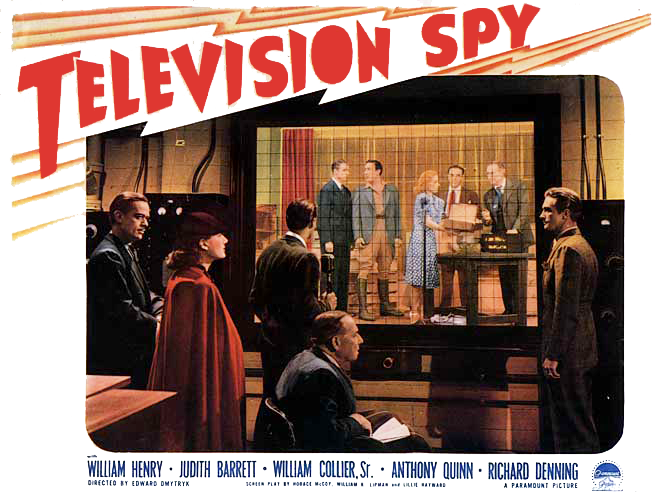
You don’t have to be one of those security losers whimpering in the dark, “We are always one step behind the bad guys.” Anticipate. Be prepared.
Consider this book to be the most important course missing from a top business school’s curriculum. It will help you increase profits you never knew were missing and personal privacy you never want to miss.
Information Security v. Spies – How We Got This Way
Spying as a method of getting ahead in business was not encouraged in days gone by. Children were taught entrepreneurial ideals, like: hard work, independence, persistence, and inventiveness. Sure, spying occurred, but not on the scale we see today.
So, how did we get to…
“Screw it, let’s spy!”
 In days of old, business was conducted locally. Everyone in town knew each other. Step out of line, and you were ostracized. With better transportation, business became regional. Step out of line, and maybe you were ostracized. Today, business is global. Step out of line, and you stand a good chance of getting away with it. But there is more to the story.An Evolutionary Process
Seasoned readers will remember the days when kids had heroes who exemplified moral codes: The Shadow, Joe Friday (Dragnet), Dan Matthews (Highway Patrol), the Lone Ranger, etc.
Others may remember the glamorization of the “good” spy from TV shows like Secret Agent, The Man from U.N.C.L.E., Mission Impossible, I Spy, and The Prisoner.
These entertainments still languish deep in digital tombs of YouTube—as forgotten as the Greek chorus.
On the bright side, at least these morality plays still exist.
1960s spy shows spawned a huge market for children’s spy toys. The market remains strong today, and the toys now are much more technically advanced.
For decades, children have grown up with spy toys. Spy toy makers blatantly promote spying as cool and fun. Eventually, this propaganda becomes accepted as truth.
The morally strong TV hero children looked up to have disappeared. The superhero genre of today has little connection with the past. The good vs. evil, once sharp dividing plot lines, are now fuzzy. The superheroes themselves are perplexed. Dark sides and cracks in morality infect the genre. “Golly gee, Superman. What happened?” (J. Olson, 1955)
Several generations of children became desensitized to spying. So now, as adults, some of them have moral compasses that look like a Batman fidget spinner.
Today’s Information Security Reality
Here is a brief excerpt from an Entrepreneur Magazine article entitled,
“3 Reasons You Should Spy on Your Competition“
One of the best ways to thoroughly understand your market is to take a look at your competition. By not spying, you are at a significant disadvantage.
Here are three reasons it’s a good idea to spy on your competition:
- Without spying, it’s impossible to know what you’re up against — as a result, you can’t completely prepare.
- It’s easy to do. Don’t be discouraged from spying on your competition by assuming that it is daunting or resource-intensive.
- It would be wasteful not to spy. Speaking of wasted resources, without spying on your competition it’s very easy to waste time trying to find your ideal market and your reach.
Times changed. The spy kids grew up. You are now being targeted.
Today’s workplace is filled with former children who have no compunction about spying. Amazingly, one survey found 20% of respondents would not think twice about selling their—or a coworker’s—company computer password for the right price.[2]
Almost everyone has a multipurpose spy tool in their pocket. (Maxwell Smart only had a shoe phone.) And, if one needs a thumb-sized bug that can be monitored from any phone in the world, it can be purchased on eBay for less than $25.00.
Why is Business Espionage Big Business?
- The risk level is low.
- The reward level is high.
- Advanced surveillance gadgets are inexpensive and expendable. Readily available in spy shops and on the Internet. And purchases can be untraceable.
- Motivations for spying never change. Money. Power. Sex.
Other Factors Contributing to Business Espionage
- Increased competitive pressures placed on employees, consultants, and businesses force ethics-bending.
- Media glorification presents spying as sexy and justifiable.
- Spy toys and games are actively promoted to children as being fun and acceptable. Children grow up.
A Big Information Security Mistake
“We don’t need a Technical Information Security Survey. We’ve never had a spying issue here.”
How would you know if you did? Successful spying is invisible.
Spy Rule #1 – Be invisible.
By definition, successful espionage goes undetected; only the failures become known to the victim. Even fewer become public in the news.
If you ignore business espionage or decide to take the “risk-assessment” gamble, you will never know when you’re bleeding information. Parasites try not to alert their hosts.
The Solution Spies Hate
Technical Surveillance Countermeasures inspections, aka TSCM. Inspections actively look for:
- Evidence of information security failures.
- Evidence of electronic surveillance: audio, video, and data.
- Information loss vulnerabilities in the workplace, your transportation, and your home office, and at off-site meeting venues.
- Loopholes in your perimeter security.
- Decaying or broken security hardware.
- Information security policies no longer being followed.
- And information security vulnerabilities inherent in the office equipment you use every day.
Vigilant organizations conduct these surveys during off-hours and on a regular basis. Negligent organizations, well, they just have their pockets picked. The point is, re-inspections limit windows of vulnerability, and they cost less than one-time inspections.
An independent consultant’s report is proof of your organization’s due diligence. It will also help prove the enhanced duty of care required for protecting trade secrets and other sensitive information in court.
Considering what is at stake, a Technical Information Security inspection is very economical insurance. No, it is even better than espionage insurance… it can prevent losses in the first place (a mantra repeated often in this text).
What Does a Corporate Spy Look Like?

Think you would know one if you saw one?
There is no exact answer, but a composite picture was developed by the Business Espionage Controls and Countermeasures Association:[4]
Spy Profile Checklist
- 21-35 years old. Female as often as male.
- College graduate with a low-value degree.
- Broad, short-term employment background.
- Money problems—low pay, poor self-management.
- Military intelligence experience.
- Acquaintances with law enforcement backgrounds.
- Considered an outsider or loner.
- Disability precluding a law enforcement career.
- No police record prohibiting sensitive employment.
- Has a driver’s license, possibly with a poor driving record.
- Romantic hobbies or interests: Writer, photographer, skydiver, scuba diver, etc.
- Collects underground and paramilitary literature.
- Has an active interest in firearms, often with training.
- Recruited from a want ad for an investigative trainee.
- Often just a drone of a professional handler.
- Music, chess, math abilities (skills associated with code breaking and espionage).
Keep this list in mind, but remember…
Your snoop could be anybody
Fun Quiz: Would You Make a Good Spy?
Find out if you could be a good spy. Test yourself for fun. Learn what makes a good spy. Before you hire any TSCM inspection/counterespionage consultant, make sure they know what makes a good spy, too. This quiz was created by Wolfgang Lotz, a real spy who died in 1993.
1. What is your principal motivation for wanting to become a good spy?
a. Adventure
b. Money
c. Ideals
2. How old are you?
a. Under 20
b. 20-24
c. 25-35
d. Over 35
e. Over 45
f. Over 55
3. How good a liar are you?
a. You usually blush when you tell a lie
b. You can tell an occasional fib, but you hate telling really big lies
c. You could win at poker
d. You love telling a good big lie
e. You never lie
4. How courageous are you? If you saw someone (say, a man much bigger and stronger than you) beating a child brutally or torturing a puppy. Would you…
a. Try to talk him out of it?
b. Stop him by any means, even attack him physically?
c. Inform the police?
d. Mind your own business?
5. How would you go about collecting information? Assume that you suspect your wife (husband, companion) of being unfaithful to you. Would you…
a. Hire a detective?
b. Ask close friends to supply you with information?
c. Conduct discreet inquiries on your own without involving anyone else?
d. Make a scene and browbeat her (him) into admitting her (his) guilt?
e. Do nothing and hope things will straighten themselves out?
There are a total of 10 questions. The rest of the questions, along with the answers, are in the book.